Pride: The Intersection of Individual Fulfilment and Social Interests (3)
Pride: The Intersection of Individual Fulfilment and Social Interests (3)
The Central Role of NGOs in Promoting the Pursuit of Pride
Unlike the desire to make money, the desire to earn pride has no expiration date and always remains present within human nature. There is no end to the desire for excellence, and it can confidently be said that withdrawing from social competition is not the genuine wish of any individual.
If we examine the examples that appear to contradict this claim, we will find that, rather than indicating an absence of the desire to compete, they generally reflect an involuntary withdrawal—a withdrawal caused by the restraining power of certain internal or external factors.
Every individual enters social competition with a certain level of physical and intellectual assets. These resources enable them to enter competitive arenas in pursuit of their dreams, objectives and ambitions.
A lack of courage or feelings of inferiority are among the internal barriers that deprive many people of the confidence to make independent efforts.
Miscalculation and an inaccurate assessment of one’s abilities—or, in other words, an exaggerated sense of self-importance—may also cause a person to enter unequal competitions. This becomes another restraining factor because such individuals are highly likely to experience failure, and the resulting disappointment may prevent them from continuing to compete.
Certain external factors also play a restrictive role. These include the manipulation of cultural and, at times, religious beliefs, which has historically been used as a means of persuading societies to accept predetermined fate and destiny.
Socially numbing narratives and the negative messages promoted by those who have experienced failure are also external deterrents. One of the most common negative accusations is that socially active individuals who seek financial success are insatiably greedy.
Since there is no final limit to either the level or the quality of competitive environments, the winners of social competitions are continuously exposed to higher levels of competition. After every victory, they find themselves entering a new contest at a higher level and under different conditions.
Behind every victory, new competitors and a new competitive environment emerge. Compared with an individual’s previous experience, these competitors are unfamiliar and are generally much stronger than those encountered before. The new environment is also substantially more challenging. Newcomers therefore have no choice but to intensify their efforts, even if they are accused of being excessively motivated by money.
What is certain is that the true nature of competition can be understood only by those who are actively engaged in it or who have sufficient experience. Consequently, the negative judgements of those who have no understanding of other people’s challenges deserve little consideration.
Does Lifelong Competition Leave Any Opportunity for Peace and Enjoyment?
Many meaningful concepts and words in life are not absolute and do not possess a single, fixed meaning. They are relative concepts whose meanings change according to circumstances. Familiar terms such as “good” and “bad” are examples of such relative concepts. Peace of mind and enjoyment of life follow the same principle.
In fact, both peace and enjoyment are not only relative in meaning but also highly temporary and short-lived. It would therefore be more accurate to regard them as dynamic and changing concepts that are inseparably intertwined with time and place.
Contrary to what might be assumed, peace does not necessarily emerge at the end of a contest or after victory has been achieved. On the contrary, victory is often accompanied by an influx of anxiety about preserving the position that has been gained in future competitions.
Enjoyment exists within the contest itself, and peace can be experienced during the process of competition. Therefore, those who have successfully passed through a particular stage have already tasted success together with its accompanying sense of peace and enjoyment.
Managing the Distribution of Opportunities to Earn Pride
It is correct to say that pride is an individual feeling that produces personal satisfaction. At the same time, however, its undeniable influence on the direction of social emotions is clearly visible.
The positive response of society is ultimately what high achievers seek. In other words, gaining public approval and attaining a distinguished social position are among the highest objectives in life.
In a sports stadium, only a small proportion of those present are athletes competing on the field. These are the high achievers who have crossed the boundaries of restraint and entered the arena in which pride and distinction can be earned.
For professionals, earning pride is accompanied by earning income. As previously stated, however, financial need has an expiration point. For this reason, making money motivates individuals to advance their goals only while they continue to experience financial insufficiency. Once their financial needs have been satisfied, it is primarily the desire to earn social pride that can maintain—and even increase—their drive towards excellence.
From another perspective, the majority of those present in a stadium are spectators. Dedicated spectators represent people whose restraining factors have prevented them from entering an independent field of competition, although they still desire the experience of pride.
The difference lies only in the degree and form of pride they seek. They have chosen a level of pride that does not require personal risk-taking. They identify themselves as supporters of a particular athlete or sports team, wear clothing bearing their team’s colours or symbols, share the excitement of competition with fellow supporters and celebrate the victory of their favourite team or athlete. At the same time, they experience concern and sorrow when their team or favourite athlete loses, even though both emotions are temporary and short-lived.
The spectator defines himself through his favourite athlete. In effect, he creates an avatar of himself—a representative who is free from the weaknesses he recognises in himself and who possesses the power to defeat his rivals.
The exhilaration caused by the victory of a favourite athlete or team is enjoyable for the spectator. Even the sadness or anxiety resulting from defeat contains subtle elements of pleasure. Behind the eruption of such emotions across society, we can observe an infusion of vitality into the repetitive flow of everyday life. At such moments, even if only briefly, the human spirit emerges from beneath the heavy burden of daily routine and draws a fresh breath.
The victory of a favourite athlete clearly has no positive effect on a spectator’s economic life. What occurs in reality, however, is the experience of a sense of pride to which the spectator believes he is entitled.
What can be understood from this is the existence of a powerful element within the hidden layers of most human personalities—a potential or mysterious power whose benefits can be revealed at very little cost and with almost no delay, provided that it becomes the subject of purposeful social management and direction.
How Can We Expand the Use of This Hidden Power?
Human emotions are resources that, when purposefully managed, can serve maturity and progress and help achieve valuable social objectives.
The defining characteristics of progressive societies—such as social cohesion, unity and participation—do not exist independently. Rather, they emerge at the end of a purposeful social process.
Designing and implementing a process capable of directing social behaviour depends on recognising those natural human characteristics that possess sufficient appeal and motivational power.
Pride is a uniquely human emotion that is both universal and, without exaggeration, less likely than many other motivations to generate destructive conflicts in social relationships. This alone provides sufficient reason for placing it at the centre of efforts to achieve ideal social cohesion.
We must attempt to rescue the concepts governing social behaviour from beneath the weight of fear and mistrust. By creating employment opportunities and subsequently establishing job security, society’s level of self-confidence should be raised to the point where, first, providing feedback becomes an essential social responsibility and, second, through thoughtful social management, opportunities to earn pride are removed from the exclusive domain of imaginary superheroes and distributed throughout society. In this way, every individual, through their particular abilities, can become the hero of a smaller environment.
Under this approach, another dimension—namely, the opportunity to earn pride—can be added to every ordinary social activity, including common occupations, alongside its economic objectives.
The dominant motivation of business owners and workers is to earn an income and secure their livelihood. However, a second motivation can be introduced very easily: earning pride through their own everyday occupation.
As stated earlier, the motivation to make money gradually loses its intensity in the medium term and becomes a repetitive and tedious process. This reduces employees’ productivity and affects the quality of their output.
By contrast, attracting public recognition and appreciation is an inspiring prospect that brings renewed enthusiasm into their lives. This enthusiasm can ultimately increase productivity, improve the quality of goods and services and, most importantly, strengthen social cohesion.
For society to benefit from these functions, not only senior officials but also other capable, informal institutions must take action and enable their communities to benefit from this virtually cost-free resource.
Where Should We Begin?
I will refrain from discussing the influential role of government in this article and will instead focus on the private sector. It must nevertheless be emphasised that the government’s responsibility for establishing a healthy environment for social and economic competition cannot be delegated to the private sector.
Educational institutions and workplaces are the points at which individuals and society intersect. They therefore provide the best environments for promoting opportunities to earn pride.
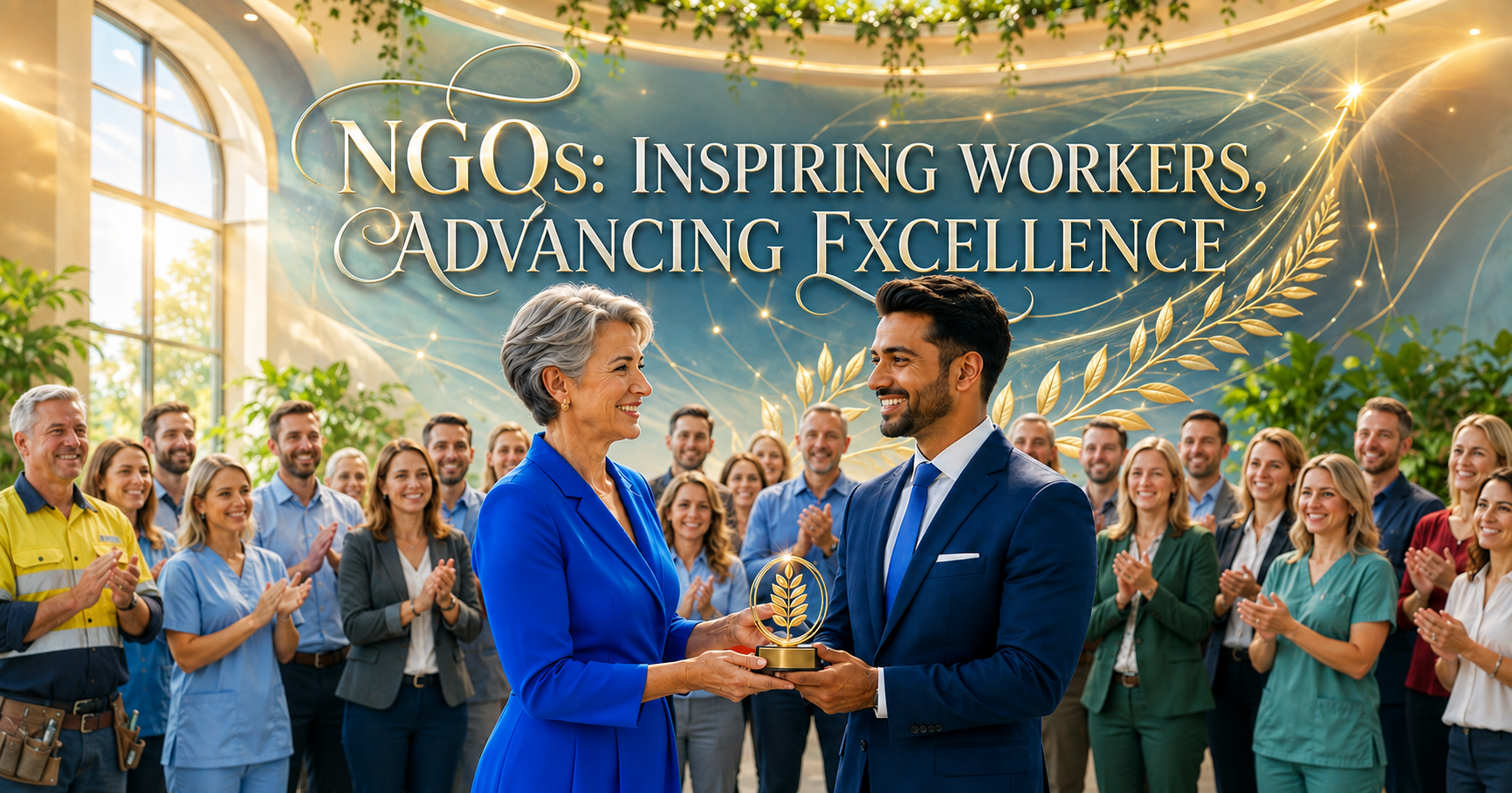
NGOs, which commonly operate in the form of associations, unions and professional bodies, can be effective instruments for identifying and motivating high achievers within their respective fields. A problem affecting many such organisations, however, is that they either lack managerial insight or possess structures and management practices that resemble small government bureaucracies more than private-sector organisations.
To strengthen the role of emotions within social strategies, we need to moderate the private sector’s imitation of rigid bureaucratic and disciplinary structures so that essential emotions can find opportunities for expression.
A substantial proportion of the rules, protocols and administrative regulations governing professional associations must be reconsidered. Many management approaches based on unnecessary reprimand and punishment should be replaced with supportive, promotional and encouraging measures.
In countries dominated by rent-seeking economies, the activities of professional associations are primarily focused on making demands of the government. Their organisational direction is consequently reduced to lobbying and negotiation for the purpose of obtaining government privileges.
Professional organisations operating within healthy economic environments, however, adopt an approach based on cooperation and synergy among members. In addition to placing particular emphasis on education to modernise operations and improve performance quality, they consistently promote interaction among members and implement motivational initiatives.
One example of such interaction is the establishment of periodic campaigns to evaluate performance and select outstanding individuals or leading companies as exemplary members of their profession or industry.
To understand the motivational role of such initiatives in improving professional performance, it is necessary to consider one of the defining characteristics of a healthy economy: a competitive market that is free from the domination of monopolies.
The establishment of a relatively safe and healthy economic environment in the modern world is the result of decades—and perhaps even centuries—of transparent civil legislation.
Mandatory yet adaptable laws, whose primary concern is alignment with national interests, have restricted monopolistic markets and directed business owners towards continued participation in closely contested competition. Under such conditions, overtaking competitors is rarely easy, let alone creating a substantial lead over them.
In a healthy competitive environment, where the only basis for one professional’s superiority over others is better performance, a member who receives the endorsement of a reputable professional body and is awarded the title of Outstanding Professional of the Year will gain greater trust from consumers.
Naturally, such trust will attract more customers and positively affect that individual’s or company’s income.
Achieving such recognition will therefore become a major objective for professionals and business owners and will continuously motivate them to make greater efforts.
The effective role of professional associations in guiding this process can be summarised as follows: establishing professional assessment criteria, preventing influence and discrimination, providing effective education and consultation and, finally, widely introducing the selected individuals or businesses to their target communities.
It must once again be emphasised that such a positive outcome can be achieved only against the background of a healthy economy. In a rent-seeking economy, victory in competition and the achievement of greater profit depend primarily on gaining greater access to privileged resources and economic rents.
Dr Gholamreza Reihani Bozorg
28 May 2026