The Identity of the Iranian Workforce
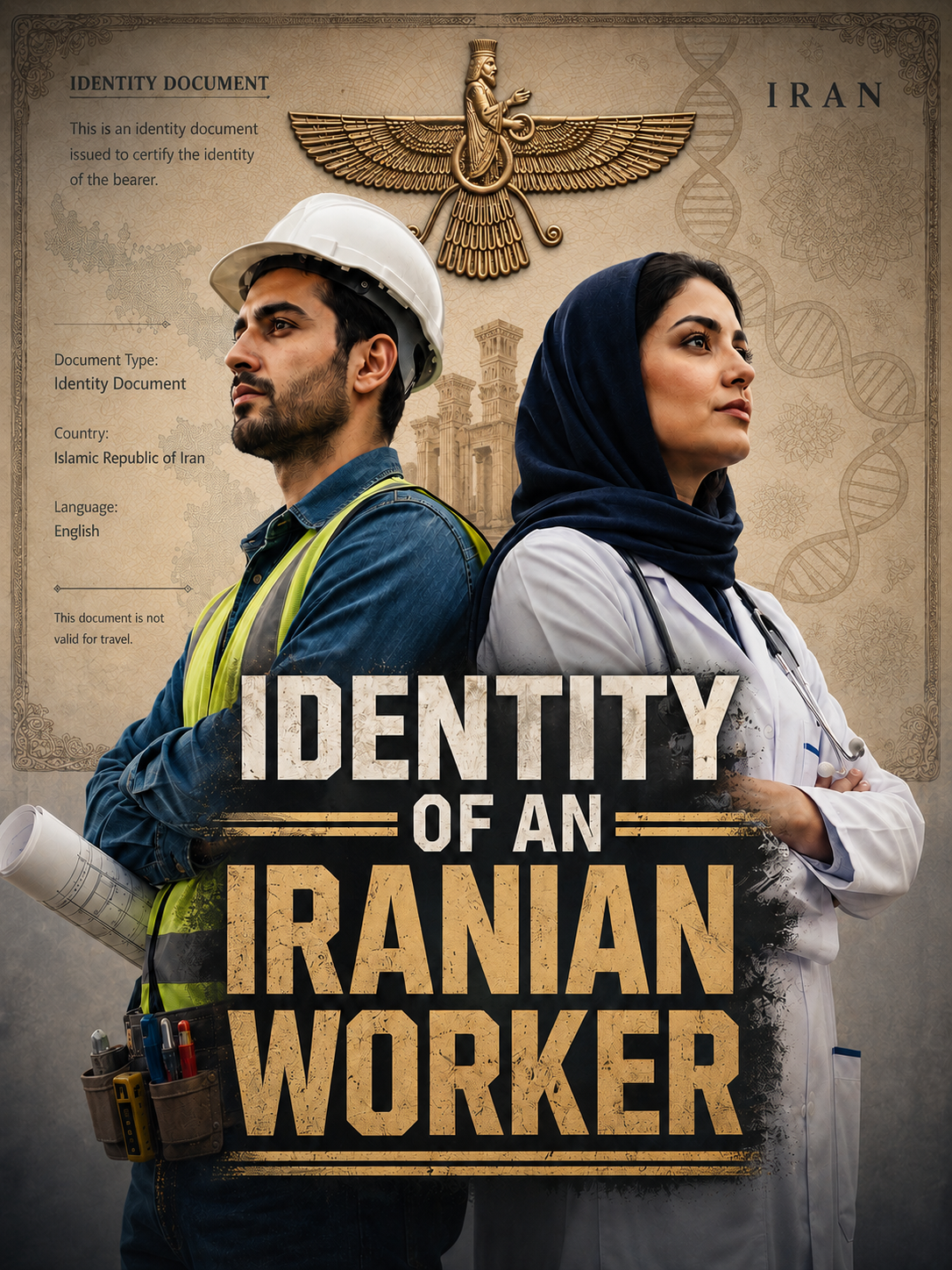
The Identity of the Iranian Workforce
A thorough understanding of the personal characteristics and social culture of job candidates has always provided the foundation for developing effective roadmaps for recruiting new employees and planning improvements in workforce productivity. It is therefore natural that this subject has consistently remained at the centre of attention for human resources professionals.
What makes the matter somewhat complicated, however, is that there is no graduated scale for evaluating qualitative attributes such as culture and personality—no instrument that allows organisations to quickly compare the cultural qualities they seek with the beliefs and values of a candidate for a particular position. Individual beliefs, unlike academic knowledge or technical skills, are neither tangible nor readily measurable. Moreover, unsupported claims and statements alone cannot help uncover the realities involved.
The presence of Iranian workers beyond the borders of their country of origin does not have a particularly long history. Nevertheless, during the past decade or two, as a growing wave of Iranians has moved abroad, we have witnessed their influential presence in international labour markets.
To date, I have not found an official document that directly ranks Iranian workers globally in terms of work quality, productivity, or work ethic, because nationality-based rankings of this kind are extremely rare. Nor can I honestly or scientifically claim, without adequate evidence, that the Iranian workforce is inherently valuable. What I can say is that independent government and labour-market data demonstrate that people born in Iran have a significant presence in skilled and professional occupations in countries such as Australia and Germany.
That said, the evidence available to me is far from insignificant. There is substantial official and credible evidence from which the quality and capabilities of the Iranian workforce may reasonably be inferred.
In March 2026, the respected German Economic Institute, Institut der deutschen Wirtschaft (IW), published a report on Iranians employed in the German labour market. Its findings were based on official statistics obtained from two authoritative sources: the Bundesagentur für Arbeit—Germany’s Federal Employment Agency—and the Statistisches Bundesamt, or Federal Statistical Office.
The findings are particularly noteworthy. According to the report, 58.6% of employed Iranians held jobs subject to social insurance contributions, compared with 52.5% of the entire foreign workforce in Germany. The report further states that 73.1% of Iranians were employed in skilled-worker and professional positions (Fachkraft), whereas the corresponding figure for the non-Iranian foreign workforce was 62.7%. It also specifies that 31.7% of Iranians worked at the specialist or expert level, compared with an average of 18.3% among other foreign workers.
The report adds that 43.3% of employed Iranians held a university qualification, compared with 19.5% of other foreign workers. It also indicates that the average monthly income of employed Iranians was €3,528, while the corresponding figure for the foreign workforce excluding Iranians was €3,204.
Another useful source is Australia’s 2021 Census, conducted by the Australian Bureau of Statistics (ABS). The census confirms that 39% of employed Iranians in Australia worked in the Professionals occupational category, compared with 27.2% of the total overseas-born workforce. It also reports that 14.2% of employed Iranians worked as Technicians and Trades Workers, compared with 11.5% of other overseas-born workers.
Other notable findings include the fact that 11.9% of employed Iranians worked as Managers, while only 4.4% were employed as Labourers.
The statistics also show that 50.4% of Iranian-born people aged 15 and over held a bachelor’s degree, compared with an average of 37.5% among the remainder of Australia’s overseas-born population.
Overall, these findings confirm that Iranians account for a considerably higher proportion of Australia’s professional workforce than the average among people born outside Australia.
It is not particularly difficult to identify the roots of this achievement during the Iranian workforce’s relatively recent emergence on the international stage. For decades, the bodies and spirits of Iran’s capable young people have been subjected to restrictions that have gradually exhausted their endurance. The unending struggle with international sanctions and an economy distorted by preferential access and rent-seeking has clouded their future with uncertainty, leaving them little opportunity for self-actualisation.
It is therefore unsurprising that millions of energetic young people, despite homesickness and the pain of separation from their homeland, remain vibrant and highly motivated—like arrows restless against a fully drawn bowstring, ready to be released towards a brighter future.
Their struggle against adversity has carried them across the threshold of personal growth and maturity. Today, they are ready to prove themselves. They seek success, recognition, advancement—and life itself. They believe in some of the most essential qualities for successful employment: perseverance, loyalty, and responsibility. For this reason, despite initially lacking international knowledge and experience, they have not only avoided serious difficulties but have also secured a distinctive place for themselves in the global workforce through determination and hard work.
The defining characteristics of young Iranians comprise a collection of apparent contradictions that combine to produce a remarkable personality. An experience-based examination of the Iranian character suggests that young Iranians seek variety and can be restless, yet they are loyal and responsible. They are bold and willing to take risks, yet alert and realistic. They are self-reliant and possess a strong sense of self-respect, yet remain modest and humble. They can be pioneers and leaders, yet are also adaptable and capable of following direction.
I acknowledge that accepting such an extensive range of positive attributes may not be easy. Nevertheless, none of the apparent contradictions described above is unusual in a mature and well-developed personality.
“A developed personality” is a fitting description for the young Iranian: a person born and raised in a challenging time and place who has accumulated an extraordinary variety of experiences within a relatively short period of life—experiences that have shaped them into someone determined, purposeful, and destined to succeed.
Gholamreza Reihani Bozorg
18 August 2026